|
Garden ant:
Lives in colonies, each colony is built from 3 to 6 years of 2000-3000 ants, workers are usually headed by an insect reproductive / queen /. It also includes eggs, larvae and pupae. The colony is located in the nest most often in the open - in trunks, fence posts, constructions of wood and etc. . Sometimes garden ants build secondary satellite nests, which are not occupied by the queen. Garden ant eats almost anything that is consumed by man. The ant menu includes: syrups, honey, meat and other foods. In addition, their movement to and from production and administrative buildings and warehouses for finished products or raw materials is uncomfortable and unwanted.
Pharaoh ant:
She also lives in colonies, but more numerous - each includes tens of thousands of ants - workers, one or more reproductive individuals / queens / eggs, larvae and pupae. Colonies live in nests, which has a complex structure and is supported by workers. Pharaoh ant usually occurs in cavities of the walls, under floors or outdoors. It is omnivorous, but prefers sweets, syrups, honey, jellies and more. Besides damaging the output it can mechanically transmit bacteria that cause human diseases.
Treatment:
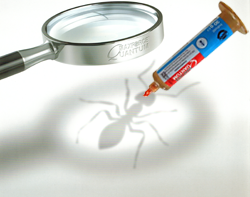 Treatment against these insects is difficult because of their social life and the inaccessibility of their nests. To prevent their penetration, it is necessary to fill all holes and cracks, paying particular attention to stores and warehouses for food and catering establishments. Insecticides and acting chemicals kill only individuals, and therefore their use in the nest, is far more effective than the premises. Powder insecticides are most effective against ants - powder particles are carried into the anthill and infect others. By eliminating the queen mother anthill collapses. Possible use of insecticide and paste, similarly as in cockroaches relies on hard to reach places, places with high concentration. |
To fight the ants
| |
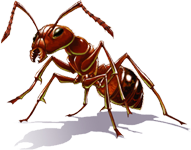 The most common is the red / Pharaoh / ant. It is the only known cosmopolitan of over 6,000 species of ants. Optimal conditions for the development of ants are 27-33 ˚ C, humidity 80%.